Tuesday, June 26, 2007

What is HyperText and HyperMedia?

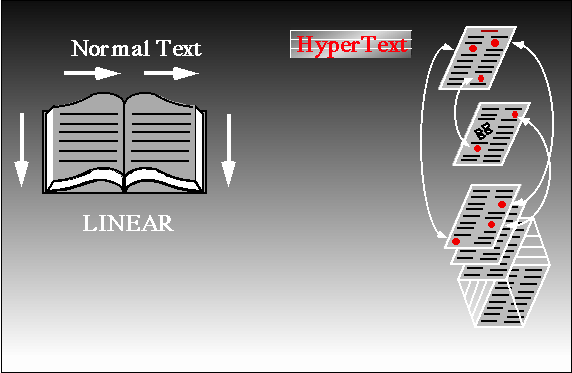
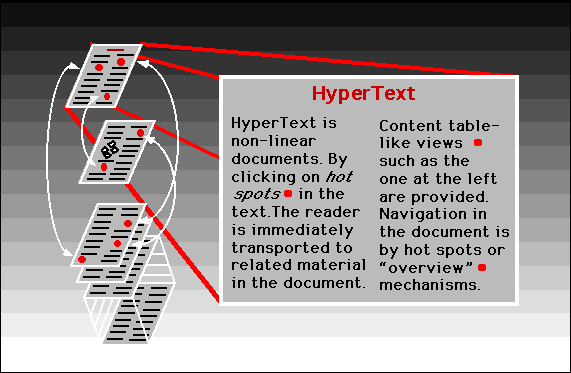
Hypertext is a text which contains links to other texts. The term was invented by Ted Nelson around 1965.

Hypertext is therefore usually non-linear (as indicated below).

Definition of Hypertext

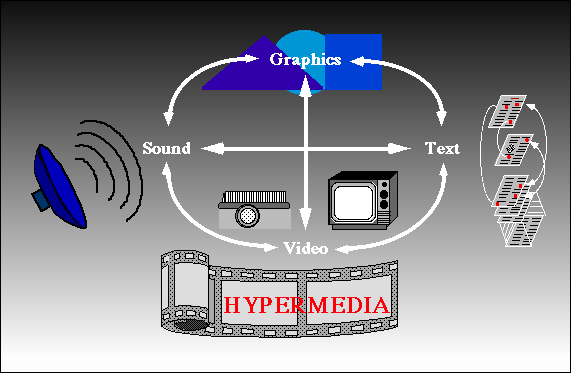
HyperMedia is not constrained to be text-based. It can include other media, e.g., graphics, images, and especially the continuous media - sound and video. Apparently, Ted Nelson was also the first to use this term.

Definition of HyperMedia

The World Wide Web (WWW) is the best example of hypermedia applications.

What is multimedia

The use of computers to present text, graphics, video, animation, and sound in an integrated way. Long touted as the future revolution in computing, multimedia applications were, until the mid-90s, uncommon due to the expensive hardware required. With increases in performance and decreases in price, however, multimedia is now commonplace. Nearly all PCs are capable of displaying video, though the resolution available depends on the power of the computer's video adapter and CPU.

Wednesday, June 20, 2007

Welcome to the Spring-Summer Edition of Multi-Media World!


lIn this quarter’s edition we’ve got the usual searchable catalogue of all our current available products, new releases, stockists and our popular games pages.
We highlight some of the season’s most useful products, including language learning packages to get you in the holiday mood from Linguaphone, new releases from Suse and entertainment ideas from Mapware to help you through the school holidays!
Multi-Media World is connected with the CBL Source and is an online version of our free quarterly magazine, that you can pick up in many of the high street stores listed in our stockists page.We hope you enjoy this edition of MMW!

Multimedia World

In an ideal world, computers will blend into the landscape, will inform but not overburden you with information, and make you aware of them only when you need them.
By Alexandru Tugui
"In the twenty-first century the technology revolution will move into the everyday, the small and the invisible. The impact of technology will increase ten-fold as it is imbedded in the fabric of everyday life. As technology becomes more imbedded and invisible, it calms our lives by removing annoyances while keeping us connected with what is truly important. This imbedding, this invisibility, this radical ease-of-use requires radical innovations in our connectivity infrastructure". — M. D. Weiser
Multimedia, interoperability, and intelligence science hold the attention of the information world today. The jump to tomorrow's technologies will require the incorporation of the computer as a common item of such technologies. Thus the computer will remain omnipresent in the background as a facilitator. It has been said that a characteristic quality of tomorrow's technologies is that they will be calm. The term, first used by Mark Weiser and John Seely Brown in the early 1990s, has been interpreted and built upon ever since. This paper briefly presents some dimensions of the concept of calm technology against the multimedia background of tomorrow's world.